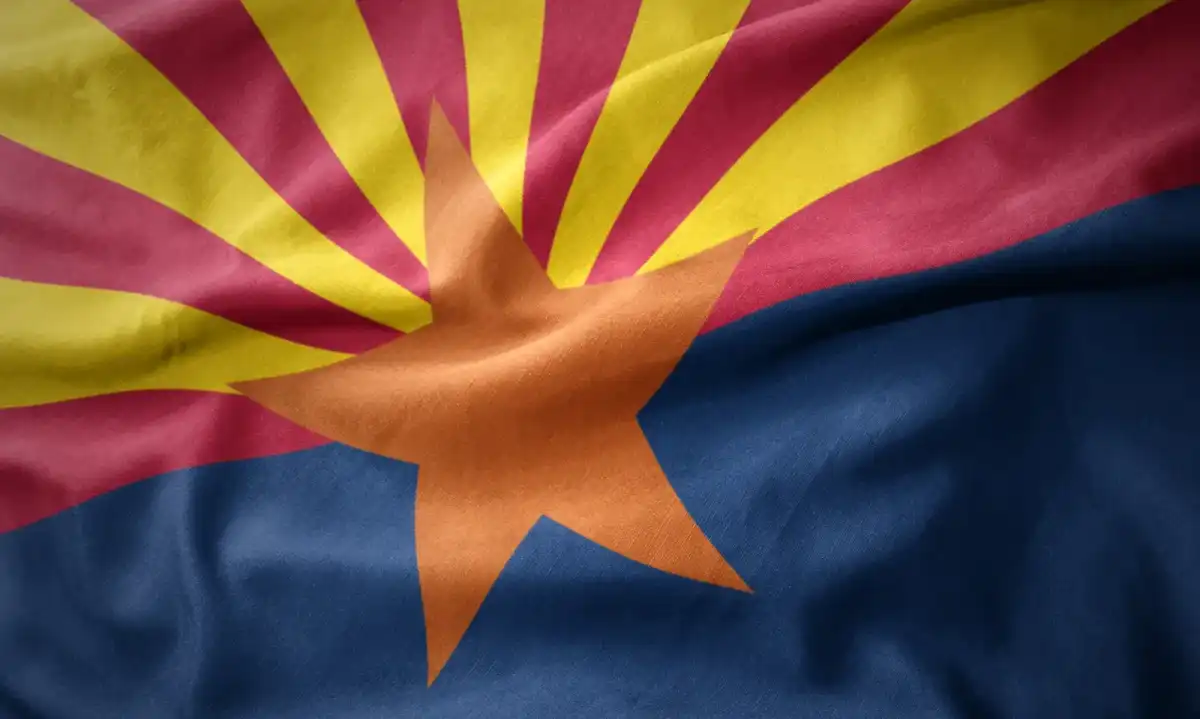
Arizona Governor Katie Hobbs vetoed HB 2133, known as the "Protect Act," on Friday, June 20, 2026, a measure that sought to implement new consent and verification requirements for adult content uploaded online from Arizona IP addresses.
The bill, which passed through the Republican-controlled state legislature, is now dead unless the legislature can secure the necessary votes to override the veto. Governor Hobbs, a liberal Democrat, announced her decision in a letter to legislative leaders, citing concerns that the bill contradicted federal record-keeping statutes and the federal Take It Down Act.
Bill Provisions and Industry Response
HB 2133 aimed to introduce new state-mandated requirements for adult content uploaded to the internet from IP addresses based in Arizona. These requirements included new consent measures, similar to those adopted in states like Alabama. The bill also featured provisions designed to prevent non-consensual intimate images (NCII), including those generated by artificial intelligence.
Under the proposed requirements, adult sites would have been mandated to use "reasonable" verification methods to ensure that any individual depicted in sexual material was over 18 and had provided consent. Additionally, these sites would have been required to maintain records of such verification for at least seven years. While these age and consent provisions are described as reflecting measures already considered standard in the adult industry, an earlier draft of the bill contained a contradictory provision. This earlier draft would have forbidden producers from retaining identifying information after model age verification was complete, a "catch-22" that would have made it impossible for adult sites to operate in Arizona. This specific provision was eliminated during the amendment process.
The Free Speech Coalition (FSC) worked with Republican state Rep. Nick Kupper, the primary sponsor of the bill, on substantive changes to the legislation. FSC Director of Public Policy Mike Stabile stated that HB 2133 would have applied the consent and age-verification protocols used by the adult industry to all platforms globally and to any sexual material deemed "harmful to minors." Stabile noted that FSC collaborated with Rep. Kupper on amendments that preserved adult platforms' ability to block and report illegal content.
Governor Hobbs' Justification for Veto
Governor Hobbs justified her veto by highlighting several concerns. She stated that her office attempted to work with the bill's sponsor on ways to further protect victims without shielding politicians from criticism, which she indicated HB 2133 did. Hobbs referred to concerns expressed by Rep. Kupper regarding the use of artificial intelligence to parody elected officials and politicians. Kupper specifically mentioned the critically-acclaimed animated sitcom South Park, which used AI to generate a parody of President Donald Trump. Rep. Kupper's concern was about non-consensual parody, noting that South Park had parodied President Donald Trump nude, with one creator using his own finger as a simulation of his penis to present Trump as having a small, talking penis with anthropomorphic features.
Additionally, Governor Hobbs mentioned the federal Take It Down Act as a reason for her veto. She noted that this federal act addresses NCII nationally and has an active regulatory regime in place. Hobbs' veto letter to legislative leaders indicated that the bill's provisions contradicted federal record-keeping statutes.
Legislative Context and Veto Powers
Governor Hobbs has set veto records in recent years. The Arizona Constitution grants the Governor two distinct veto powers: a general power, allowing the veto of an entire bill on any subject, and a line-item power. The line-item power, found in Article V, section 7 of the Arizona Constitution, allows the Governor to object to one or more items of appropriations of money while approving other portions of a bill. The Arizona Supreme Court has considered cases related to the Governor's line-item veto authority, such as Rios v. Symington, which addressed whether the creation of special funds constituted appropriations and if transfers from these funds could be line-item vetoed. The Court held that an appropriation occurs when the Legislature sets aside a certain sum of money for a specified object and creates an authority to spend the money.
Key Facts
- Arizona Governor Katie Hobbs vetoed HB 2133, the "Protect Act," on Friday, June 20, 2026.
- The bill aimed to impose new consent and verification requirements for adult content uploaded online from Arizona IP addresses.
- HB 2133 included provisions to prevent non-consensual intimate images (NCII), including those generated by artificial intelligence.
- Governor Hobbs cited contradictions with federal record-keeping statutes and the federal Take It Down Act as reasons for her veto.
- Republican state Rep. Nick Kupper, the bill's sponsor, expressed concerns about non-consensual parody of elected officials using AI.
- The Free Speech Coalition (FSC) worked with Rep. Kupper on amendments to the legislation.