GO.cam has introduced a new NFC-enabled age verification solution that utilizes smartphones and compatible electronic identity documents. This development aims to provide a convenient and secure method for online age verification while prioritizing user privacy.
NFC-Enabled Age Verification Process
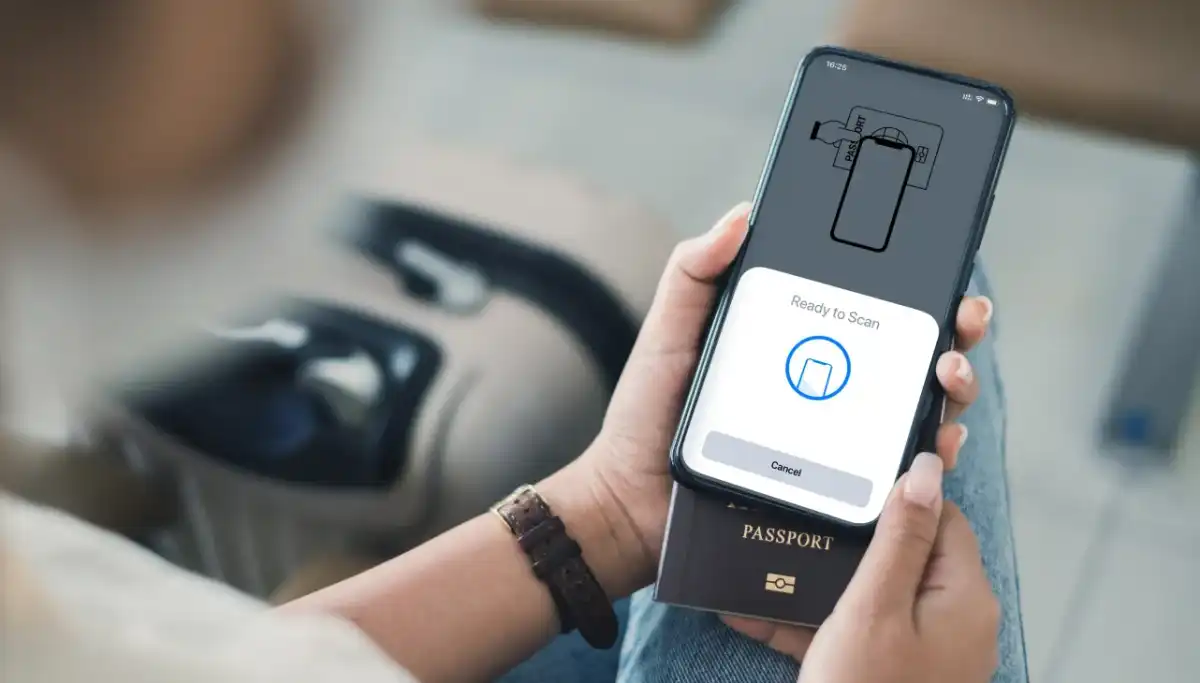
The new solution from GO.cam allows users to establish their legal age by using a smartphone and an electronic identity document, such as a passport. The process leverages the NFC chip embedded in supported documents, offering an alternative for online age verification.
The verification process begins with users scanning the NFC chip in their passport or compatible electronic identity document with their smartphone. The system then compares the document's chip-stored photograph with the user's face. This comparison checks that the person completing the process is the document's rightful holder. By combining electronic document verification with facial comparison, GO.cam aims to improve the reliability and efficiency of online age checks while minimizing friction for legitimate users.
NFC identity verification uses near-field communication technology to securely read data from ePassports and electronic identity cards. This method enhances the security and speed of digital identity verification by utilizing the encrypted chip within these documents. The NFC chip contains biometric and demographic data, which is securely read and transmitted. This data is often encrypted and requires a specific access key, typically derived from the machine-readable zone (MRZ) on the document, to unlock. This ensures that only legitimate readers with access to the visual information can extract the digital data.
The process typically involves scanning the machine-readable zone (MRZ) of an ePassport or electronic ID card using a device's camera to extract key information, including the document number, date of birth, and expiry date. Following this, the user taps the document to the back of their NFC-enabled smartphone, allowing the smartphone's NFC reader to communicate with the chip.
The initial NFC implementation is designed to work with electronic documents that comply with the ICAO Doc 9303 standard. Supported document types include biometric passports and NFC-enabled identity cards issued in more than 150 countries. ICAO Doc 9303 specifies the technical requirements and security features associated with electronic travel documents, providing an international foundation for compatible document-based verification.
GO.cam states that the solution is 100% free, with no cost to the user and no hidden fees. All processing occurs on the user's phone, not on a remote server. The company also notes that the verification result can be securely stored in an anonymous GO.cam account and reused later with a simple face check, eliminating the need to scan the ID document again each time. This allows for one verification to be usable across multiple platforms and sessions.
Privacy and Compliance
A platform representative explained that the solution prioritizes user privacy. Personal information processed during verification is immediately deleted upon completion, and no personal data is transmitted or stored. The website receives only the information needed to confirm whether the user meets the applicable age requirement, following the principle of double anonymity. GO.cam states that personal data never leaves the user's device or ID document, and nothing is stored or transmitted to GO.cam's servers. The data used for verification is deleted immediately after the check is completed. The only thing that can optionally be retained is the result itself: age verified.
Today, almost every country issues electronic identity documents such as e-Passports, e-Driver’s licenses, and e-ID cards. These documents are widely used and are considered to be secure. They help to securely identify the owner and provide protection against identity theft. Their key feature is an electronic RFID chip that holds data that can be read and verified with NFC-enabled smartphones. Electronic identity documents include biographic and biometric data, such as name, gender, photo, signature, or fingerprints, which are cryptographically secured and signed with a certificate of the country of origin. This makes counterfeiting NFC-enabled documents a more difficult task.
GO.cam is certified in Germany and the United Kingdom, and is audited for GDPR compliance.
Advancements in AI and Global Reach
GO.cam is also advancing its AI-based capabilities. The company has obtained the new IEEE 2089.1 certification for its improved AI-powered age estimation technology. This development is intended to help reduce differences in estimation accuracy across ethnic groups and genders, promoting more consistent results.
Marco Forastieri, marketing director at GO.cam, stated that the technology helps strengthen the protection of minors while making it easier for adults to access websites that require age verification. He added that GO.cam stands out as one of the fastest and most effective age verification solutions (AVS) on the market.
The solution is designed as a single system covering approximately 1 billion people across more than 150 countries, including Europe, the United States, Canada, China, India, South Africa, and Brazil. This system is built on infrastructure that is already trusted worldwide. The NFC standard used is the same as that already used by millions of people daily for electronic passports and automated border control (e-gates).
Key Facts
- GO.cam introduced a new NFC-enabled age verification solution on October 28, 2026.
- The solution uses smartphones to read NFC chips in electronic identity documents like passports.
- Personal information is deleted immediately after verification, with no data transmitted or stored by GO.cam.
- The system compares the document's chip-stored photograph with the user's face for verification.
- GO.cam has obtained IEEE 2089.1 certification for its AI-powered age estimation technology.
- The solution supports ICAO Doc 9303 compliant documents from over 150 countries.