
MEMPHIS, Tenn.—A U.S. District Judge has ordered Tennessee to face First and Fourteenth Amendment claims in a lawsuit challenging the state's age verification law, marking a development for adult industry plaintiffs.
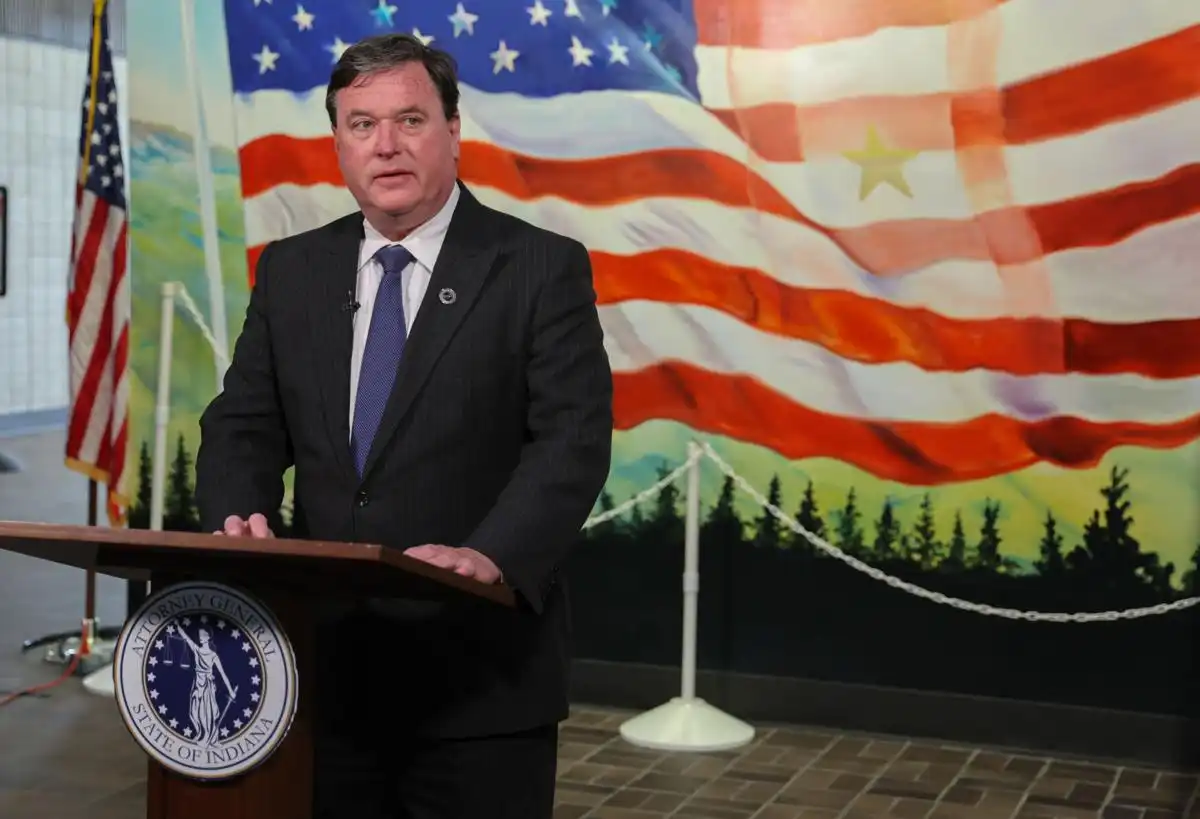
Chief U.S. District Judge Sheryl H. Lipman of the Western District of Tennessee denied Republican Attorney General Jonathan Skrmetti's motion to dismiss the case. The Free Speech Coalition (FSC) and its co-plaintiffs, including the parent company of the creator platform JustFor.fans, had adequately pleaded their claims and established the court as the appropriate jurisdiction for the case.
The lawsuit targets Tennessee's Protect Tennessee Minors Act (PTMA), which criminalizes noncompliance with age verification requirements. The law imposes penalties of felony charges and up to 15 years in prison.
Legal Arguments and Judge Lipman's Order
Jeff Sandman, lead counsel for FSC and the co-plaintiffs, stated that Judge Lipman denied the Tennessee Attorney General's motion to dismiss in every respect. This allows the Free Speech Coalition and its co-plaintiffs to proceed to discovery on claims brought under the First and Fourteenth Amendments and the Supremacy Clause of the United States Constitution. Sandman described the decision as "thorough, thoughtful, and reasoned."
Mike Stabile, director of public policy for FSC, echoed Sandman's sentiments, calling the ruling a "crucial victory" that demonstrates the "strength of our arguments."
The FSC sued Tennessee after the Republican-controlled Tennessee General Assembly implemented the PTMA. The law was amended to reflect the legal structure of Texas's age verification law, House Bill (HB) 1181, and to align with a U.S. Supreme Court ruling concerning the constitutionality of the Texas law, Free Speech Coalition et al. v. Paxton.
However, Stabile and others indicated that the immediate ruling suggests states adopting age verification may have overreached in regulating digital access to online adult platforms. Stabile stated that the Paxton case "may have established precedent, but it did not give states carte blanche to restrict adult content."
Corey Silverstein, a First Amendment attorney focused on adult entertainment clients, reinforced this view, noting that the Supreme Court's decision in Free Speech Coalition v. Paxton "did not give [the] states a blank check to regulate constitutionally protected adult speech however they see fit."
In her order, Judge Lipman addressed several key points. She noted that the plaintiffs allege the PTMA is "substantially overbroad" in violation of the First Amendment. Lipman observed that invalidating "a law based on overbreadth is 'strong medicine,'" requiring plaintiffs to "demonstrate from the text of the statute and from actual fact that a substantial number of instances exist in which the law cannot be applied constitutionally." Skrmetti made no challenge to the overbreadth claim, leading the court to conclude that "plaintiffs’ overbreadth claim survives dismissal."
Lipman also noted that plaintiffs successfully argued that the PTMA is preempted by federal law under the Communications Decency Act. Preemption claims survived dismissal, indicating a state-federal conflict between online safety laws.
Concerns over vagueness in the law violating the Fourteenth Amendment were also addressed. Lipman questioned the terms "'commercial entity' and 'commercially reasonable,'" noting that while Skrmetti argued these terms appear in other statutes, the PTMA's status as a "criminal statute that touches First Amendment rights" means the vagueness claim is not implausible. This suggests the PTMA's enforcement could conflict with civil liberties and civil rights.
Implications and Future Outlook
Silverstein observed that Tennessee's law presents "serious constitutional and statutory issues," and the court determined that the plaintiffs sufficiently pleaded First and Fourteenth Amendment claims to allow the case to move forward. He also highlighted the court's decision to permit the preemption claims.
Silverstein clarified that the ruling is not a final determination of the Tennessee law's unconstitutionality but is significant because Tennessee attempted to use the Paxton case to end the litigation at the pleading stage. He concluded that "The constitutional debate surrounding online age verification is far from over."
Lawrence Walters, another First Amendment attorney with adult industry clientele, stated that Lipman's ruling is "instructive on how age verification law challenges may be analyzed after Paxton." He noted that the court recognized that Paxton upholding the Texas law under intermediate scrutiny does not automatically mean a different statute, such as Tennessee’s, will survive a constitutional challenge. Walters pointed out that Tennessee’s law differs from Texas's law by imposing criminal penalties, and "These variations may be enough to justify a different result than occurred in Paxton, when the case is heard on the merits."
Ricci Joy Levy, president and chief executive officer of the Woodhull Freedom Foundation, supported these arguments, stating that "states cannot evade the First Amendment by calling censorship ‘protection.’" Levy, whose organization has Walters as general counsel, added that "Age-verification laws force adults to surrender privacy before accessing lawful speech, while doing little to address the real challenges young people face online." She expressed satisfaction that the court recognized these "serious constitutional and privacy concerns deserve to be heard.”
Skrmetti's office has not released a statement on the ruling.
Key Facts
- Chief U.S. District Judge Sheryl H. Lipman denied Tennessee Attorney General Jonathan Skrmetti's motion to dismiss a lawsuit challenging the Protect Tennessee Minors Act (PTMA).
- The Free Speech Coalition (FSC) and co-plaintiffs can proceed with First and Fourteenth Amendment claims, as well as Supremacy Clause claims.
- The PTMA imposes felony charges and up to 15 years in prison for noncompliance with age verification.
- The court found that plaintiffs adequately pleaded claims of overbreadth, preemption by the Communications Decency Act, and vagueness under the Fourteenth Amendment.
- Legal experts indicate that the ruling clarifies that the Supreme Court's decision in Free Speech Coalition et al. v. Paxton does not grant states unlimited authority to regulate adult content.
- The lawsuit was filed by FSC and a diverse range of co-plaintiffs, including individuals and companies in sex education, journalism, sexual wellness, and adult content creation and distribution.