A federal appeals court has ruled that zoning officials in Fargo, North Dakota, acted in an “arbitrary and capricious” manner when they prevented sex toy retailer Romantix from opening a planned retail store. The decision by the U.S. Court of Appeals for the 8th Circuit remands the case back to a lower court to determine potential relief for Romantix.
Zoning Dispute and Initial Denial
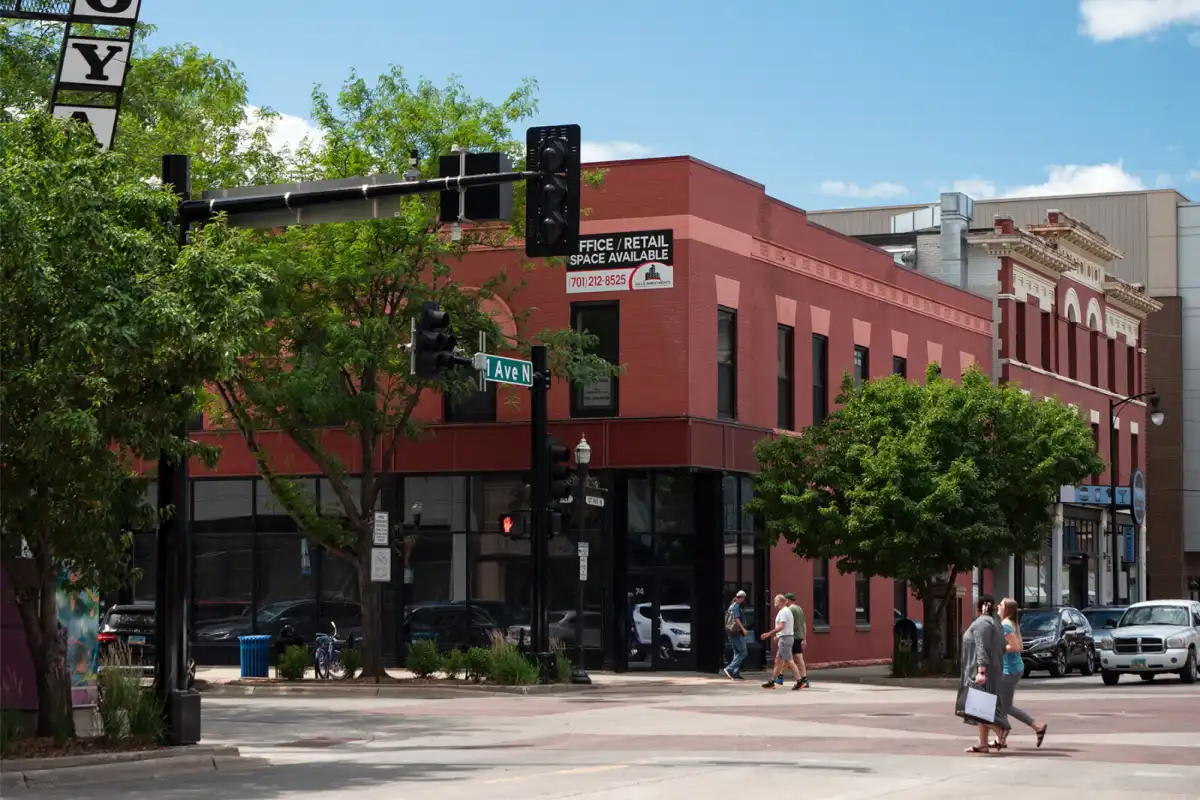
The dispute stems from Romantix-Fargo, Inc.'s 2022 attempt to open a new location in Fargo’s downtown mixed-use district (DMU). Romantix sought to move its store from 417 Northern Pacific Ave. to the Syndicate Building, located at 74 Broadway in downtown Fargo, at the corner of Broadway and First Avenue North.
Romantix contended that city zoning officials initially indicated, via a zoning confirmation letter, that they would approve its plan to open a new store in the DMU district. This approval was contingent on the store not selling sexually oriented books or magazines, as stocking these items would classify it as an “adult bookstore.” Following this guidance, Romantix retooled its plans, signed a seven-year lease, and spent $400,000 on the proposed new store.
However, the permit was subsequently denied based on a new interpretation of the rules, which equated Romantix's operation with an adult bookstore for zoning purposes. Adult bookstores, entertainment centers, or cinemas are not permitted in the Downtown Mixed Use zone. The Fargo City Commission voted 4-1 on October 17, 2022, to uphold the denial of the change-of-use permit, backing the city's Board of Adjustment and Planning Department. Commissioner John Strand cast the lone dissenting vote, with a supermajority of four commissioners needed to overturn the Board of Adjustment's decision.
Romantix sued the city and its director of planning and development, Nicole Crutchfield. Shortly after Romantix filed suit, the city began updating its zoning ordinances to classify “sexual device shops” as “adult establishments.” Under these amended provisions, a store like Romantix would no longer be permitted in the DMU zone.
Legal Challenges and Appeals
Romantix sought a preliminary injunction against the city’s decision, arguing that if it could not open and operate before the new ordinance passed, its business would be “destroyed without full legal remedy.” The U.S. District Court for the District of North Dakota denied this preliminary injunction on December 22, 2022. Chief Judge Peter D. Welte presided over the case, Romantix-Fargo, Inc. v. City of Fargo, North Dakota, and Nicole Crutchfield. The court also denied Romantix's motion for an emergency temporary restraining order and a motion to expedite proceedings.
The district court disagreed with Romantix's constitutional claims, including that the definition of an “adult bookstore” was a content-based regulation of speech, that the term was unconstitutionally vague, that the city deprived Romantix of procedural due process, and that its zoning regulation amounted to a prior restraint or “zone out.” The court noted controlling Eighth Circuit precedent that sexual device sales were not expressive activity implicating the First Amendment, and Romantix had stated it did not intend to sell adult reading or video material.
Romantix appealed its case to the 8th Circuit. In its appeal brief, Romantix-Fargo stated, “Changing position as to the meaning of Adult Bookstore after official direction was supplied is the very epitome of unfair.” The company argued that the city’s zoning director lacked the authority to disregard the text of the land development code (LDC) “simply because doing so would not produce the desired result,” and that administering officials had conducted an “ad hoc analysis according to their own personal predilections.”
At a March 17 appeal hearing before the 8th Circuit, Romantix-Fargo’s attorney, Matthew Hoffer, told a panel of three federal judges that Fargo blocked the downtown location based on a desire to exclude the company, retroactively adjusting its zoning ordinances to justify the denial. Hoffer argued that the revised ordinance should not apply, as “at the time that Romantix Fargo Inc. applied for their permit, the definition was just ‘adult bookstore,’ not ‘sex device shop.’”
Representing the city of Fargo, attorney Scott Bergthold argued that Romantix was not entitled to "grandfathering" because it never actually opened or operated the proposed store, but merely "contemplated" doing so.
Appeals Court Decision and Remand
On Thursday, August 27, 2026, the U.S. Court of Appeals for the 8th Circuit issued its ruling in Romantix-Fargo, Inc. v. City of Fargo, et al. The court rejected some of Romantix’s claims, including that the city violated its First Amendment rights and that the zoning ordinance was unconstitutionally vague. The court noted that Romantix’s proposed store did not plan to sell any books, magazines, periodicals, or DVDs.
However, the 8th Circuit determined that the zoning commissioners’ denial of the permit application was “arbitrary and capricious under state law,” because Romantix’s proposed store did not meet the then-operative definition of “adult bookstore.” The court stated that it remains unclear what relief is still available to Romantix. The case has been remanded back to the U.S. District Court for the District of North Dakota – Eastern, to address whether Romantix’s state-law claim is moot, or whether it is possible for Romantix to retroactively obtain a permit under the former ordinance. If the district court decides that Romantix’s claim is not moot, the store proposal could be revived and brought back before Fargo’s zoning commission.
Key Facts
- A federal appeals court ruled that Fargo zoning officials acted “arbitrary and capricious” in denying Romantix a permit.
- Romantix attempted to open a new store in Fargo’s downtown mixed-use district in 2022.
- Romantix spent $400,000 and signed a seven-year lease based on initial zoning guidance.
- Fargo later amended its zoning ordinances to classify “sexual device shops” as “adult establishments.”
- The 8th Circuit rejected Romantix’s First Amendment and vagueness claims.
- The case has been remanded to the U.S. District Court for the District of North Dakota – Eastern.