The adult retail sector is increasingly recognizing the importance of adaptive pleasure, moving beyond niche categorization to integrate accessibility across all product lines. This shift aims to address the needs of a broad customer base, including individuals with disabilities, older adults, and those experiencing temporary bodily changes.
Expanding the Definition of Accessibility in Adult Retail
Accessibility in adult retail has historically been treated as a peripheral concern, often relegated to obscure website categories or framed as a medical necessity rather than a component of pleasure. However, this approach overlooks a significant demographic. Disabled individuals, older adults, chronically ill people, neurodivergent individuals, and those recovering from surgery or navigating other bodily changes represent a substantial customer base whose needs span existing adult retail categories.
These categories include lubricants, wedges, handles, mounts, lightweight toys, app-controlled devices, positioning products, pelvic floor tools, warm-up products, cleaning supplies, and educational guides. Hail Groo, a marketing expert and Colorado-based journalist, noted on October 27, 2026, that adaptive pleasure offers an opportunity to cater to customers' diverse physical realities. Groo, who identifies as nonbinary and has Ehlers-Danlos syndrome, endometriosis, autism, and ADHD, highlighted the personal experience of evaluating products based on factors like ease of holding, potential for pain, texture sensitivity, and compatibility with dysphoria or unpredictable bodily responses.
The Centers for Disease Control and Prevention report that over one in four U.S. adults has a disability. This figure does not account for individuals with temporary limitations due to post-surgical recovery, age-related changes, hormones, medication, pregnancy, injury, or stress. These customers are present across all retail channels, including physical stores, e-commerce sites, and email lists. Despite this, many retailers struggle to translate these diverse needs into conventional product language.
Strategic Categorization and Product Presentation
Accessibility should not be confined to a single "adaptive" category. While dedicated shopping guides and collections are valuable for signaling understanding to this audience, products should also be integrated into broader categories. For example, a wedge can be relevant for sex furniture, mobility support, couples’ play, senior sex, chronic pain, post-surgery comfort, and hands-free pleasure. Similarly, a lightweight wand could appear under vibrators, low-effort products, arthritis-friendly toys, sensory-conscious options, and beginner collections. A thicker lubricant might be suitable for menopause, anal comfort, medication-related dryness, post-operative intimacy, and sensitive-skin assortments.
Intimacy Rehab, an online retailer, was specifically created to offer products for disabled, injured, chronically ill, neurodivergent, and aging individuals. Such focused platforms are important for customers who have historically been overlooked, as they immediately convey that the site was designed with their needs in mind.
Research on adaptive apparel, as cited by Coresight Research, indicates that people with disabilities and their caregivers often struggle to find products that meet their needs for fit, function, and price. Adult retailers can adopt a similar use-case approach. Customers are not merely seeking "accessible products"; they are looking for solutions to specific challenges such as grip, reach, pain, fatigue, mobility, sensitivity, overstimulation, understimulation, recovery, positioning, dexterity, lubrication, firmness, pressure, cleanup, and privacy.
This implies building categories and product bundles around practical questions like: "What can I use if my wrists hurt?", "What helps me avoid pressure on my hips?", "What works after knee surgery?", "What can I use without holding anything?", "What feels comfortable when penetration hurts?", or "What works when I am tired but still want intimacy?"
E-commerce filters and product descriptions should also reflect this principle. Beyond product type, useful descriptors such as lightweight, hands-free, easy-grip, low-noise, flexible, remote-controlled, or simple controls should be included. Precise details about weight, button placement, charging method, and cleaning requirements can assist all shoppers, particularly those with access needs.
Staff Training and Marketing for Adaptive Pleasure
Sales associates do not need to be clinicians, but they should be trained to ask useful, nonjudgmental questions. Examples include: "Are you looking for something lighter to hold?", "Do you need hands-free support?", "Are you trying to avoid pressure on a particular joint?", "Are you shopping for comfort, sensation, recovery, or partner connection?", or "Would you prefer something simple with fewer settings?" This language helps customers feel acknowledged without medicalizing their experiences and enables staff to match existing inventory with needs that might otherwise be overlooked by conventional product descriptions.
Training should also establish boundaries. Associates can provide information on dimensions, materials, control layouts, and positioning options, but they should not diagnose pain or guarantee that a product will treat a specific condition. If symptoms are new, severe, or worsening, the recommendation should be to consult a qualified clinician.
Marketing efforts should ensure that adaptive pleasure is not stripped of desire. Support products can be practical while also being fun and sexy. A wedge can be sensual, a mount liberating, a remote-controlled toy playful, and a lightweight toy supportive of independence. Straps, handles, or pillows can help individuals remain present in their bodies. Bodies undergo changes due to age, illness, disability, surgery, hormones, medication, injury, pregnancy, menopause, trauma, stress, and time. Adult retail must move beyond designing for a "standard" customer who is young, pain-free, able-bodied, cisgender, neurotypical, flexible, and fully confident.
Adaptive pleasure is presented as an opportunity to meet customers where their bodies are, rather than as charity or a compliance checkbox. Brands and retailers that embrace this perspective are expected to build more useful stores, enhance product education, and foster lasting customer loyalty.
Key Facts
- Over one in four U.S. adults reports having a disability, according to the Centers for Disease Control and Prevention.
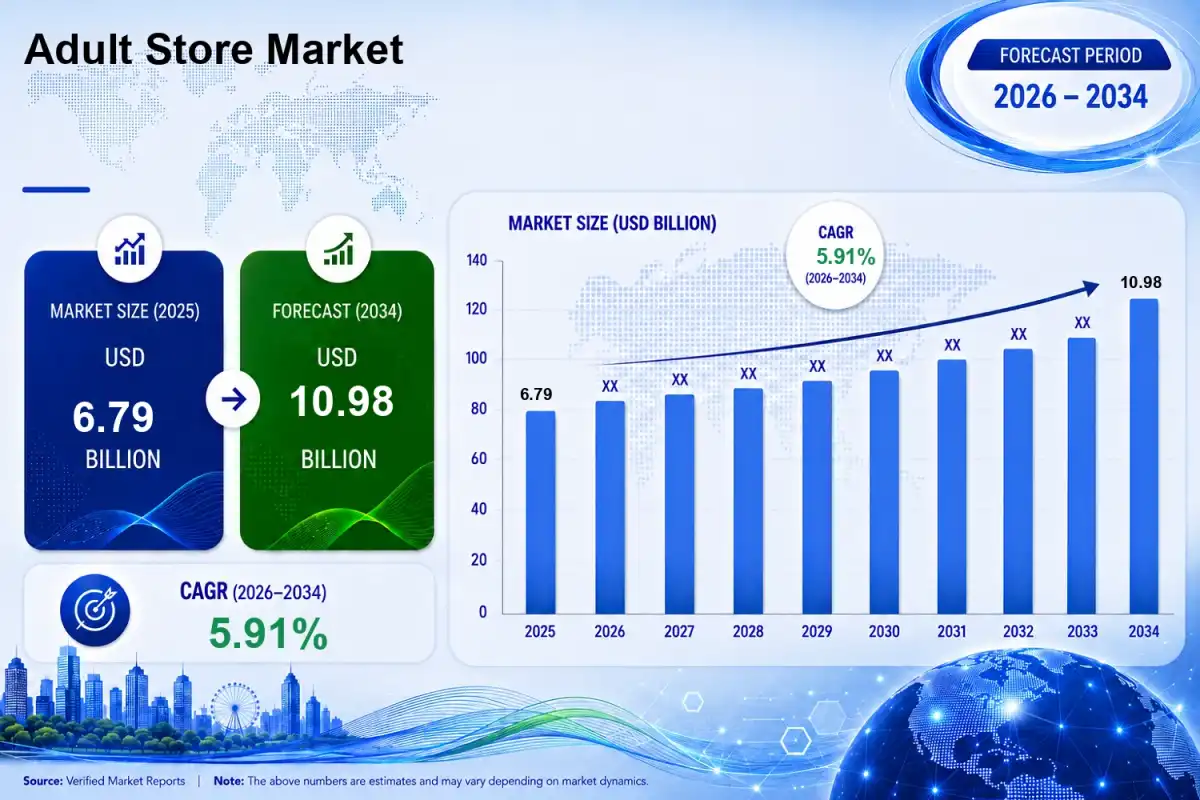
- The global adult store market size was USD 6.79 billion in 2025 and is projected to reach USD 10.98 billion by 2034, with a Compound Annual Growth Rate (CAGR) of 5.91% from 2026 to 2034.
- Intimacy Rehab is an online retailer focused on products for disabled, injured, chronically ill, neurodivergent, and aging people.
- Adaptive sexual aids, such as the IntimateRider chair, are designed to support individuals with mobility or strength challenges.
- Hail Groo, a marketing expert and journalist, published an article on adaptive pleasure on October 27, 2026.