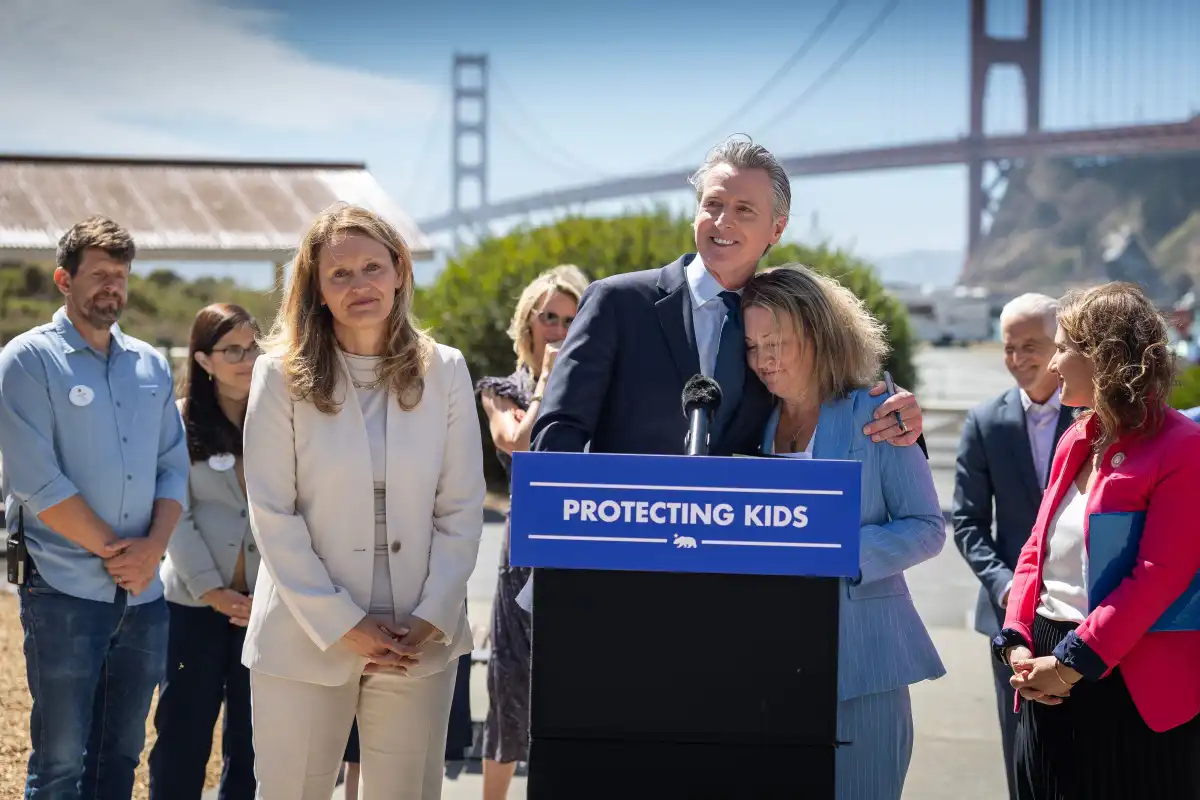
California Governor Gavin Newsom signed a package of 13 online safety bills into law on Thursday, September 10, 2026, introducing new requirements for online platforms, including those in the adult entertainment industry. The legislation includes AB 1946, which mandates reporting mechanisms for child sexual abuse material (CSAM) and expands its definition to include AI-generated synthetics.
New Mandates for Online Platforms
The newly adopted legislative package, which Newsom's office described as "nation-leading protections for children online," will significantly alter operations for online adult entertainment platforms within California's digital space. While no law mandating full-scale, site-level age verification on adult entertainment websites was adopted, the package features new requirements for age-appropriate design and age assurance protocols on certain social media features.
Among the bills signed by Governor Newsom is AB 1946, which requires owners of online user-generated content platforms, encompassing both mainstream and adult platforms, to provide a reporting mechanism for child sexual abuse material. This requirement additionally covers materials generated by artificial intelligence synthetics designed to resemble minors. AB 1946 was originally proposed by Assemblymember Buffy Wicks, a Democrat from Oakland, with coauthors from both chambers of the California Legislature.
Governor Newsom stated that the legislation clarifies California's stance against unregulated technology that could endanger children. He emphasized that innovation carries responsibility and that protecting children is paramount. First Partner Jennifer Siebel Newsom added that safety should be integrated into design rather than being an afterthought.
Operational Requirements and Legal Implications
Attorney Corey Silverstein of Silverstein Legal, a Michigan-based law practice, identified AB 1946 as particularly relevant for adult entertainment platforms. Silverstein noted that while the legitimate adult entertainment industry has consistently differentiated itself from child exploitation, AB 1946 introduces specific operational requirements beyond merely maintaining a reporting mechanism.
These requirements include a clear and conspicuous reporting process, human review in circumstances where there is no known hash match for reported material, and removal or blocking within 48 hours if there is a reasonable basis to believe the material constitutes CSAM. The bill also mandates follow-up communications with the reporting party and efforts to locate and block additional instances of the same material. Social media companies are now required to provide plain-language processes for reporting suspected CSAM or unlawful depictions of a minor.
The officially adopted bill language revises California's legal definition of CSAM to include any "intimate visual depiction" of an identifiable minor, including digital synthetics created by artificial intelligence platforms. The legislation specifies that social media platforms must ensure review by a natural person if there is no established or known hash match for reported material and it is not otherwise blocked. Furthermore, platforms must restore the availability or functionality of the reporting mechanism if it becomes unavailable or nonfunctional.
Silverstein cautioned that these obligations are backed by significant potential liability. Civil penalties can reach $250,000 for each day of noncompliance in some circumstances, and the legislation preserves substantial statutory damages that can be pursued by depicted individuals. He highlighted AB 1946's express recognition of AI-generated and digitally manipulated imagery, indicating California's effort to establish a legal framework for synthetic material.
AB 1946 is scheduled to take effect on January 1, 2027. It will also require audits and reporting to be filed with the California Attorney General's Office and the state Department of Justice. Silverstein expressed concern that lawmakers should consider the risk of creating systems that incentivize platforms to remove lawful speech due to uncertainty, as platforms facing substantial penalties may err on the side of removal. Silverstein has published additional guidance on his firm's website in a blog post titled "California’s New Child-Safety Laws: What Adult Platforms Need to Know for 2027."
Additional Online Safety Measures
Beyond AB 1946, the package of bills signed by Governor Newsom includes other measures aimed at online child safety. Senate Bill 1119, co-authored by Senator Steve Padilla, Assemblymember Buffy Wicks, and Assemblymember Rebecca Bauer-Kahan, requires operators of AI companion chatbots to assess risks to children, document findings, and provide results to an independent auditor. This bill also mandates parental controls and in-app crisis support.
Assembly Bill 2, from Assemblymember Josh Lowenthal, increases the damages a large social media company can face for conduct that harms a child. Assembly Bill 1709 prohibits social media platforms from offering addictive engagement features to users under 16. This bill passed the Legislature without any opposing votes.
Key Facts
- California Governor Gavin Newsom signed a package of 13 online safety bills into law on September 10, 2026.
- AB 1946 requires online user-generated content platforms, including adult platforms, to provide a reporting mechanism for child sexual abuse material (CSAM).
- The definition of CSAM under AB 1946 now includes "intimate visual depiction" of an identifiable minor, encompassing digital synthetics created by artificial intelligence.
- Platforms must provide a clear reporting process, human review for non-hash matched reports, and remove or block suspected CSAM within 48 hours.
- Noncompliance with AB 1946 can result in civil penalties of up to $250,000 per day and statutory damages for depicted individuals.
- AB 1946 is set to enter into force on January 1, 2027, and requires audits and reporting to the California Attorney General's Office and the state Department of Justice.