Meta Platforms, the parent company of Facebook and Instagram, has been ordered to pay a total of $942 million in a New Mexico online child safety case. This ruling includes a new penalty of $567 million, in addition to $375 million previously ordered, to address claims that the company contributed significantly to a youth mental health crisis.
Court Orders and Penalties
On Thursday, August 6, 2026, a New Mexico court issued a ruling ordering Meta Platforms to pay $567 million. This amount is designated to address harms to young people from its platforms. Judge Bryan Biedscheid stated that the majority of this money, $420 million, will be allocated for treatment services for young people. The remaining funds will support awareness and prevention, screening services, and other related costs over the next five years.
This new penalty adds to the $375 million in civil penalties that jurors had previously ordered against Meta in March. Jurors determined that Meta knowingly harmed children's mental health and concealed information about child sexual exploitation on its platforms. The combined total of these penalties amounts to $942 million.
The court also mandated specific changes to how Meta's platforms operate within New Mexico. These changes include removing "Like" counts, with such metrics only being visible to users under 18 with parental or guardian approval. Push notifications for underage users in the state are to be paused between 10 p.m. and 7 a.m., and their usage will be limited to 90 hours per month, which is approximately three hours per day.
Judge Biedscheid described Meta as a "public nuisance," comparing it to air pollution. He stated that the company must establish a fund to reduce future harms. The judge further likened Meta to a factory, with advertising and content as its product, and "the psychological harm and sexual exploitation of children to be the pollution that must be abated."
Legal Basis and Company Response
The court order stated that "significant numbers of people in New Mexico experience harm from Meta’s products due to risks of sexual exploitation, interference with education, and adverse mental health outcomes." While acknowledging that Meta is not the sole platform contributing to the youth mental health crisis in the state, the judge maintained that its platforms play a significant role and that the company has caused a "public nuisance" that it is required to abate.
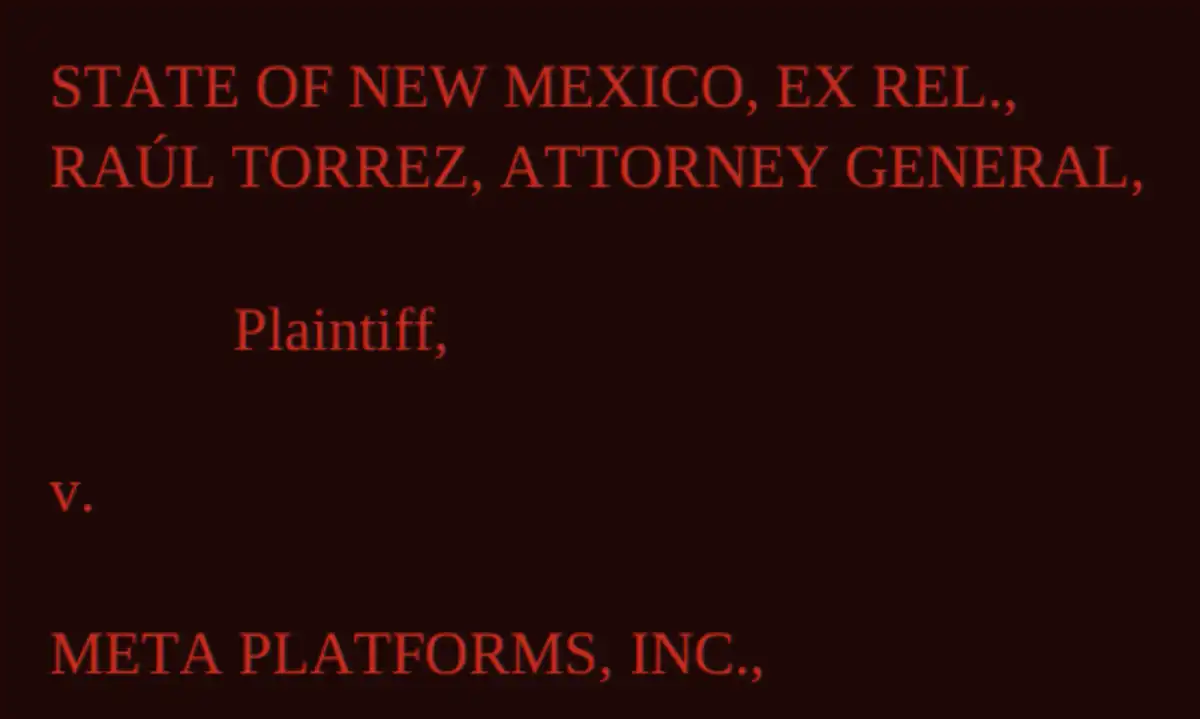
Democratic New Mexico Attorney General Raúl Torrez originally brought the case. In the second phase of the litigation, prosecutors urged the judge to require Meta to adopt age-appropriate designs, minimize addiction, improve age verification, and work to prevent child sexual exploitation through default privacy settings and closer oversight.
Attorney General Torrez praised the court order, noting that "for the first time, a court has ruled that a social media giant can be held liable for building products that endanger children, and has ordered the structural changes needed to fix it. New Mexico led the way in the courtroom." Torrez also suggested that this ruling could serve as a "blueprint other states, and other countries confronting this same crisis, can now follow." He emphasized the need for legislatures and Congress to "finish what this court started."
A spokesperson for Meta, Andy Stone, stated that the company intends to appeal the judgment. Stone said, "We work hard to keep people safe on our platforms and have been transparent about the challenges of identifying and removing bad actors and harmful content. We remain confident in our record of protecting teens online and will continue to defend ourselves against claims that misrepresent the facts." Meta had previously indicated its intention to appeal the earlier $375 million verdict, providing a similar explanation.
Broader Implications
This case marks the first instance in a U.S. court where social media addiction has been recognized as a legal concept, despite a lack of scientific consensus. Social media addiction is not a recognized diagnosis in the Diagnostic and Statistical Manual of Mental Disorders, Fifth Edition (DSM-5), which is compiled and published by the American Psychiatric Association (APA). The APA attributes proposed diagnoses under the category of technology addiction to behavioral dysfunction exacerbated by underlying diagnoses such as anxiety, depression, and other related mental health disorders.
This ruling represents the largest fine against Meta concerning child safety and is the first time a state has successfully sued Meta over child safety issues. The case has been described as a "major bellwether case" establishing a legal precedent for social media addiction in the U.S. legal system.
Key Facts
- Meta Platforms has been ordered to pay a total of $942 million in a New Mexico child safety case.
- The latest ruling, issued on Thursday, August 6, 2026, by Judge Bryan Biedscheid, ordered Meta to pay an additional $567 million.
- This $567 million includes $420 million for treatment services for young people and funds for awareness, prevention, screening, and other costs over five years.
- The new penalty is in addition to $375 million in civil penalties previously ordered by jurors in March.
- The court mandated platform changes in New Mexico, including removing "Like" counts for minors without parental approval, pausing push notifications for underage users between 10 p.m. and 7 a.m., and limiting their usage to 90 hours per month.
- Meta spokesperson Andy Stone stated the company disagrees with the ruling and intends to appeal.